
Training for the Mountains: Why the Head Game Matters More Than Your Legs
Updated: Feb 6
Spring is when people start thinking seriously about the mountains again.
Routes get planned. Gear comes out of storage. Training ramps up.
Most people start in the same place: fitness.
That’s sensible — but it’s not enough.
Because in the mountains, physical weakness rarely ends the day first.It’s hesitation, doubt, impatience, or poor decision-making under fatigue.
That’s the head game. And it deserves training too.
Fitness is necessary. Mental preparation is decisive.
There’s no shortage of training plans for the hills:
build aerobic capacity
strengthen legs and core
carry weight
move consistently over time
All of that matters. I won’t argue otherwise.
But the mountains don’t care how strong you are on paper.They care whether you can keep making good decisions when you’re tired, cold, and behind schedule.
That’s not a fitness issue. That’s preparation.
The difference between general fitness and mountain readiness
Many people train in general:
to be fitter
leaner
stronger
But mountain training works best when it’s directed.
A clear objective changes how you train:
your first UK mountain
a long ridge traverse
an alpine route
a Himalayan peak
Different scales. Same requirement: clarity of intent.
Without that, motivation drifts and training becomes vague. With it, every session has context.
Visualisation isn’t motivation — it’s rehearsal
Visualisation has nothing to do with positive thinking.
Used properly, it’s a rehearsal tool.It prepares you for what the mountain is likely to ask — not what you hope it will give.
Experienced climbers, guides, and expedition teams do this instinctively:
they imagine the approach
the pace
the weather turning
the moment a decision has to be made
If you’ve already been there mentally, it’s easier to stay calm when you arrive physically.

How to visualise like a mountaineer
1. Be precise
Forget the summit photo.
Visualise:
the early start
cold hands when sorting kit
steady breathing on a long climb
the section where progress slows
the point you ask yourself if it’s worth continuing
If your goal is a UK mountain, picture:
poor visibility
wet rock
navigation under pressure
Precision builds realism.
2. Rehearse discomfort, not success
Standing on the summit is easy to imagine — and largely irrelevant.
The work happens when you repeatedly expose yourself mentally to:
monotony
fatigue
doubt
mild fear
uncertainty
Those are the moments where poor decisions are made.
If they’re familiar, they’re manageable.
3. Anchor training sessions to the objective
Every session should have meaning beyond effort.
Long Zone 2 sessions become the approach walk
Leg-heavy days become load carry on tired legs
Low-motivation days become practice for commitment without excitement
Training stops being about numbers and starts being about readiness.
Big mountains and small mountains demand the same mindset
Here’s the truth worth stating plainly:
The psychological demands of a Himalayan giant are not different in kind from your first serious UK mountain — only in scale.
Both require:
patience
humility
honesty about limits
acceptance of discomfort
People who succeed aren’t reckless or heroic.They are prepared, patient, and realistic.
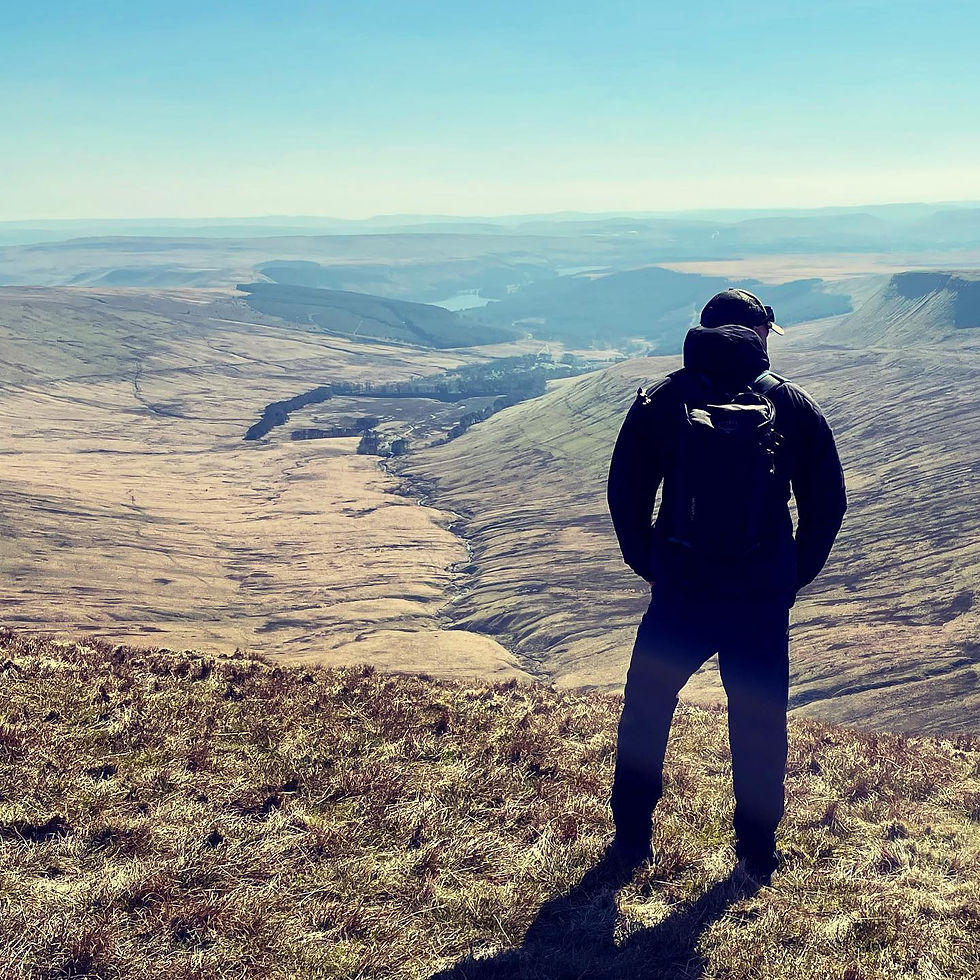
Spring is about alignment, not urgency
Spring doesn’t demand urgency.It demands alignment.
Align your training to a real objective.Align your expectations to reality.Align your head with the work required.
Do that, and when you step onto the mountain, it won’t feel unfamiliar.
It will feel like the next logical step.
A short practical visualisation exercise (do this weekly)
Time required: 5–7 minutesBest done: after training, or before sleep
Sit quietly and slow your breathing for 60 seconds.
Picture your target mountain or route — no drama, no heroics.
Run through the day in order:
the start
the approach
the hardest section
the moment you feel tired, bored, or doubtful
Ask yourself one question at that moment:
“What does good decision-making look like here?”
Picture yourself acting calmly and deliberately, not bravely.
That’s it.
You’re not trying to feel inspired.You’re building familiarity.
Final word
Train your body. Of course you should.
But remember:The mountains don’t test how motivated you are.They test how prepared you’ve been when no one was watching.
Choose your objective.Carry it into your training.And let spring be the season where preparation quietly turns into competence.


Comments